


Uganda Industry News
Teso Leaders Launch Gen. Muhoozi 2031 Presidential Bid
A coalition of leaders from the Teso sub-region has officially launched a campaign to draft Gen. Muhoozi Kainerugaba for the 2031 presidential race. The move signals early political maneuvering ahead of Uganda's next general election.
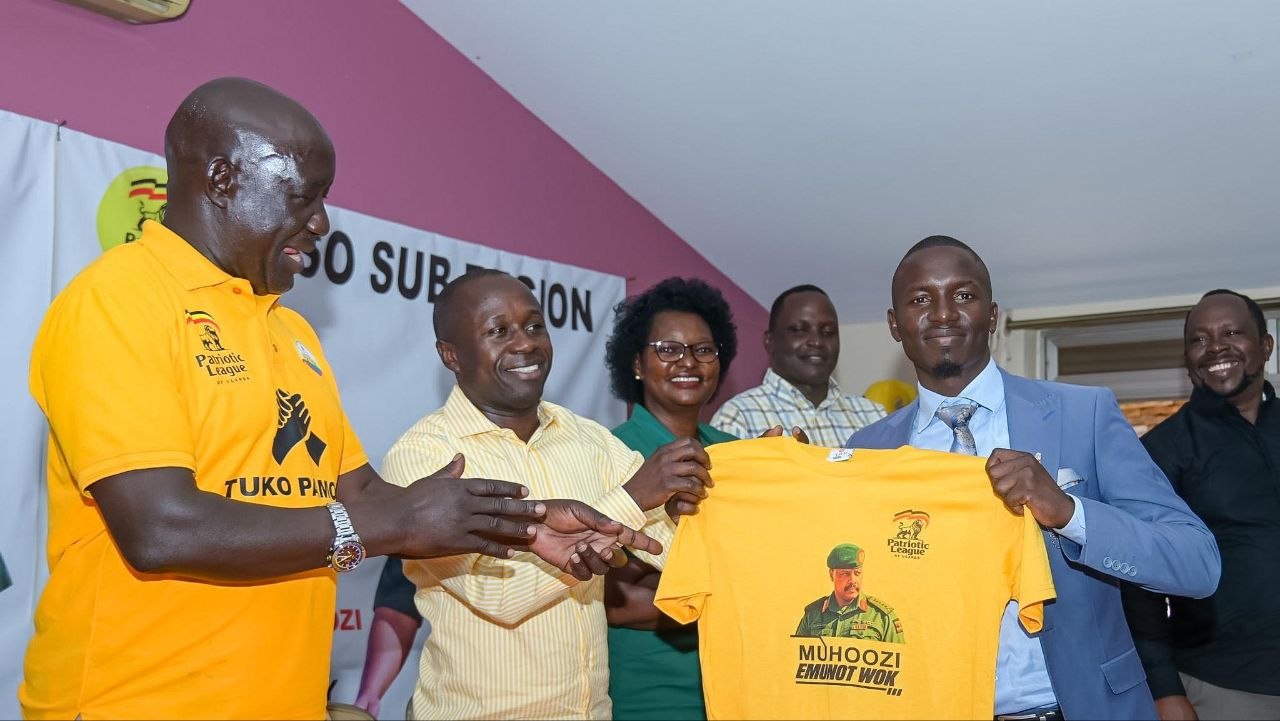
There is something about Ugandan politics that never sleeps. Even before the last general election cycle has fully settled into the history books, the next one is already being written in hotel conference rooms, on WhatsApp groups, and at roadside press briefings in districts most Kampala columnists have never visited. The latest chapter comes from the east, from the flat, sun-baked plains of Teso, where a coalition of leaders has formally launched a campaign to draft Gen. Muhoozi Kainerugaba for the 2031 presidential race. Read that sentence again and let the timeline sink in. 2031. Six years is a long time in politics, and an eternity in Uganda, where alliances can be born and buried inside a single parliamentary session.
Yet the launch itself tells us plenty about how the country's political class thinks. Teso is not a random starting point. The sub-region carries a particular weight in the national imagination, partly because of its role in the bush war narrative, partly because of its consistent electoral significance, and partly because its leaders have historically been vocal about being at the table when national deals are being shared. When a group of Teso politicians, elders, and local opinion leaders gather to endorse a draft movement, it is not simply a photo opportunity. It is a signal that a conversation is happening across the country, mostly quietly, about what the post-Museveni arrangement might look like and who gets to shape it.
The figure at the center of it all needs no introduction. Gen. Muhoozi Kainerugaba, the Chief of Defence Forces and the President's son, has spent the last several years building a public profile that is part military commander, part internet personality, part political brand. His social media presence, often blunt and unpredictable, has turned him into one of the most discussed figures in the country. His public appearances, whether at sports events, music concerts, or community functions, are covered with the intensity of a presidential campaign even when they are officially nothing of the sort. The draft movement from Teso simply formalizes what many observers have suspected for a while: that the machinery for a 2031 run is already being assembled, piece by piece, region by region.
What makes this launch interesting is the language being used. The word "draft" is doing a lot of work here. It allows the organizers to frame the effort as a grassroots demand rather than a personal ambition, which is a much safer political posture in a country where premature declarations of ambition can attract uncomfortable attention. A draft campaign says: we are not crowning anyone, we are merely responding to the people's call. It is a classic move in Ugandan political choreography, and it has been used before, by different actors, in different eras. The question is whether the choreography will hold together as the years roll on and the stakes get higher.
Teso leaders who have spoken about the initiative tend to frame it around service delivery, security, and the region's place in national development. They talk about roads, about electricity, about markets, about youth unemployment. These are the issues that animate voters everywhere in Uganda, and framing a presidential draft around them is smart politics. It grounds an otherwise abstract national conversation in the everyday concerns of farmers in Soroti, traders in Kumi, and boda boda riders in Ngora. Whether those concerns will still be the driving narrative six years from now is another matter entirely.
There is also the question of timing. Launching a 2031 draft campaign in the middle of the current term is either brilliant or reckless, depending on who you ask. Supporters argue that early organization wins elections, that name recognition takes years to build, and that by the time the ballot papers are printed, the groundwork will already be done. Critics argue that peaking too early is a real risk, that voter attention spans are short, and that a movement launched in one political climate can easily be overtaken by events in another. Uganda's political history is littered with movements that burned brightly and faded before the finish line.
And then there is the wider national picture. The conversation about 2031 is not happening in a vacuum. It is happening alongside debates about constitutional reform, about the future of the ruling party, about the role of the military in public life, and about a younger generation of voters who are increasingly impatient with the old political playbook. As I have written before in these pages, the energy of Uganda's youth is being channeled in fascinating directions, some of it into the kind of digital mobilization that TikTok has made possible, some of it into music, entrepreneurship, and faith. Politicians who ignore that energy do so at their own peril.
Speaking of which, the entertainment and cultural dimension of this story should not be overlooked. In Uganda, politics and popular culture are deeply entangled. Campaign launches are staged like concerts. Musicians are recruited as endorsers. Comedians test the boundaries of satire. A draft movement for any candidate, whether in Teso or elsewhere, will eventually need the cultural industries on its side, because that is how messages travel from press releases into the ears of ordinary people. Expect to see the usual cast of MCs, praise singers, and event promoters circling this initiative as it grows. Expect, too, the inevitable campaign merchandise, the branded shirts, the catchy slogans set to dancehall beats.
The gospel music industry, which has quietly become one of the most commercially significant sectors in the region, will also be watching closely. Political movements have long understood the power of a good choir and a rousing anthem. If the 2031 race turns into a genuine contest, the battle for the endorsement of Uganda's biggest gospel and secular stars will be as fierce as the battle for votes. For more on how that industry operates, the business of gospel music in Uganda and East Africa offers a useful lens on where the money and the influence really sit.
Back to Teso. The sub-region has produced some of Uganda's most consequential political operators, and its leaders are rarely naive about national power dynamics. Their decision to move early suggests they believe the 2031 question is genuinely open, and that positioning now will pay dividends later. It also suggests a degree of confidence that the Muhoozi brand can be sold in the east, where memories are long and loyalty is earned rather than assumed. Whether that confidence is justified will depend on how the movement handles the mundane work of politics: building structures, resolving internal disputes, and surviving the inevitable dry seasons when nothing seems to be happening.
There is a risk, of course, that this launch becomes a story about personalities rather than policies. Ugandan political coverage has a tendency to focus on who is standing next to whom, who attended whose function, whose portrait hangs where. That kind of coverage is entertaining, but it tells us little about what a candidate would actually do in office. If the Teso draft movement wants to be taken seriously beyond the news cycle, it will need to articulate a vision, not just a name. It will need to answer hard questions about land, about jobs, about regional balance, and about the relationship between civilian authority and the security establishment.
Supporters of the initiative will tell you that all of this is premature, that the movement is still in its infancy, and that criticism at this stage is unfair. Fair enough. But politics is a long game, and the earlier you start, the more time there is for scrutiny. The Teso leaders have chosen to light the match. Now the country gets to watch what burns.
Q: Is Gen. Muhoozi Kainerugaba officially a presidential candidate for 2031?
A: No. What has happened in Teso is a draft campaign, which means a group of leaders is calling on him to run rather than him declaring a candidacy. There has been no formal nomination, no manifesto launch, and no official campaign structure announced. Draft movements are political signals, not candidacies, and they can fizzle out or grow into something much bigger depending on how the next few years unfold.
Q: Why does the Teso sub-region matter so much in this conversation?
A: Teso has historically been electorally significant and politically vocal, with leaders who insist on being part of national conversations about power and development. Launching a draft movement there gives the initiative regional credibility and creates a template that other sub-regions may copy. If similar launches follow in other parts of the country, the movement will start to look less like a local gesture and more like a national strategy.
Q: What does this mean for Uganda's entertainment and media industries?
A: Political movements in Uganda have always leaned on musicians, comedians, event promoters, and media houses to spread their message. A long runway to 2031 gives those industries years of potential work, from campaign anthems to branded concerts to social media content. It also raises familiar questions about artistic independence and whether creatives should tie their brands to political projects.
Q: Should Ugandans take a 2031 draft campaign seriously this early?
A: Take it seriously as a signal, not as a conclusion. Early movements reveal how political elites are reading the future, who is aligning with whom, and which regions are positioning themselves for influence. But six years is a very long time in politics, and the issues that dominate the 2031 campaign may be completely different from the ones being discussed today. Watch the structures, not just the speeches.
Keep reading
 Entertainment & Music
Angélique Kidjo Makes History on Hollywood Walk of Fame
The pavement of Hollywood Boulevard has absorbed a lot of history. It has taken the footprints of silent film stars, the handprints of action heroes, the brass letters of studios that built an empire out of dreams.
Mpabeat Support ·
 Celebrity & Entertainment
Pallaso Accused of Violent Attack on King Saha: 2026 Fallout
The Ugandan music industry woke up this week to a story it has heard too many times before, and yet the shock still landed like a bass drum in a silent room. Pallaso, the Mayanja family firebrand whose career has been built on equal parts melody and menace, stands accused of a violent attack on fellow singer King Saha.
Mpabeat Support ·
Celebrity & EntertainmentPallaso Accused of Violent Attack on King Saha
Kampala woke up to a storm it did not ask for. By midmorning, the city's timelines were clogged with the same breathless sentence, repeated in a dozen variations, each one slightly more dramatic than the last: Pallaso had allegedly attacked King Saha. No context. No confirmation.
Mpabeat Support ·