


Regional News
Muhoozi Donates Shs100M to Tooro King's Coronation
Gen Muhoozi Kainerugaba has donated Shs 100 million towards the coronation of Omukama Edward Rukidi Nyabongo I, as his 2031 presidential bid gains momentum.
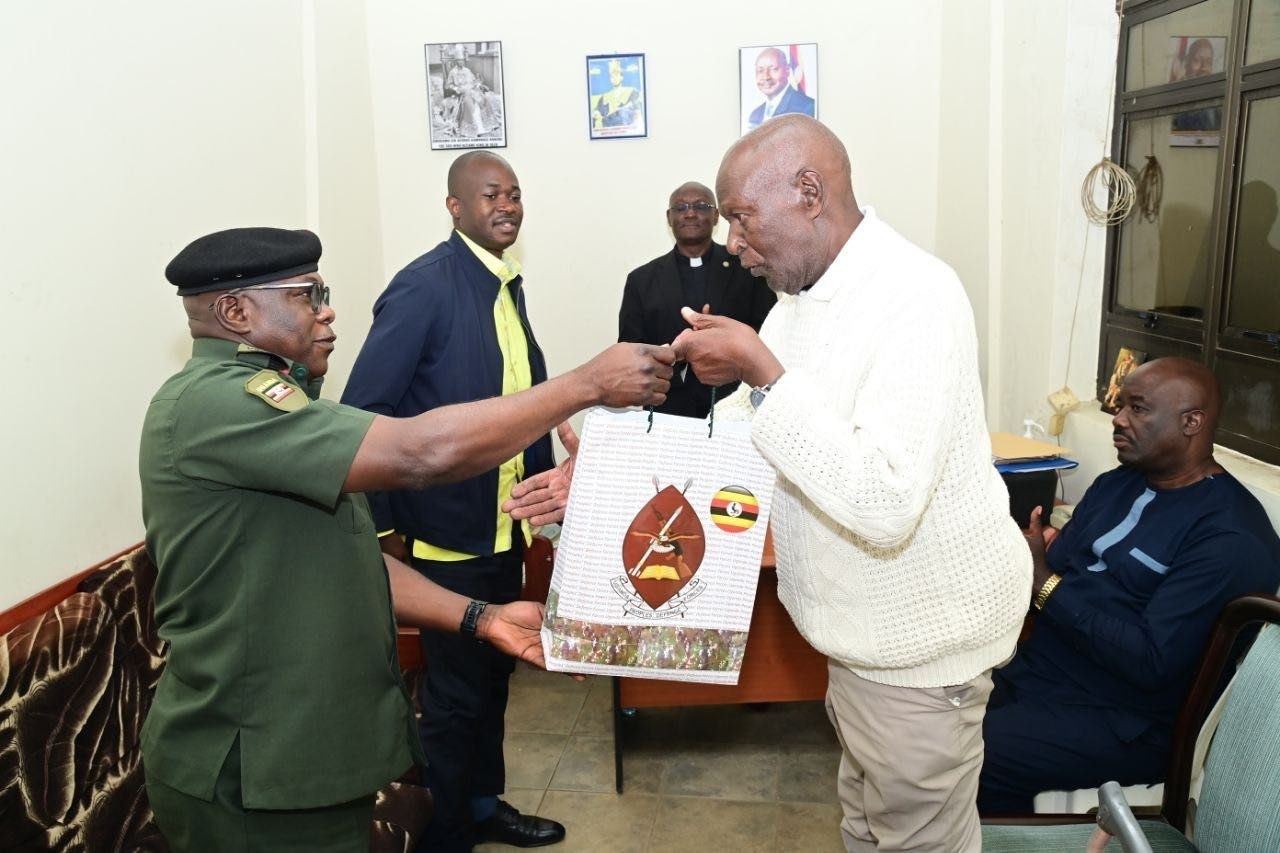
FORT PORTAL. There is a particular kind of music that plays at a coronation, and it is not the kind you hear on radio countdowns. It is the long, patient sound of drums that have waited generations for their moment. On September 29, 2026, those drums will roll across Karuziika Palace in Fort Portal as Edward Rukidi Nyabongo I is crowned Omukama of Tooro, and the kingdom will once again have a sitting monarch at the centre of its ceremonial life. But before the first royal drum was struck, the politics of the moment had already arrived, dressed in military fatigues and carrying a cheque.
On September 27, 2026, Gen Muhoozi Kainerugaba, the Chief of Defence Forces, announced on his X account that he had donated Shs 100 million towards the coronation. His Military Assistant, Colonel Muwumba, delivered the contribution on his behalf to the Omusuuga of Tooro. The message that accompanied it was short, almost disarmingly simple. This, he wrote, was his humble contribution to the coronation of the new king, and he asked God to bless Tooro. Two sentences. One hundred million shillings. And a kingdom watching.
Let us be honest about what this is, because Ugandans are not naive people. A donation of that size to a royal ceremony is never only a donation. It is a gesture with layers, and every layer has a political texture. Tooro sits in the heart of the Rwenzori region, a part of the country with its own proud history, its own cultural gravity, and its own complicated relationship with the centre of power in Kampala. When a man who chairs the Patriotic League of Uganda and is openly preparing a 2031 presidential bid sends money to a king's coronation, he is not simply being generous. He is being present. He is being seen. He is planting a flag in soil that matters.
The timing tells its own story. The coronation of Omukama Rukidi Nyabongo I has been one of the most anticipated cultural events in Uganda in years, a moment of renewal for a kingdom that has endured its share of internal turbulence and public scrutiny. President Museveni himself is expected to attend, which places the event at the intersection of tradition and statecraft in a way that few ceremonies can match. And into that intersection walks Muhoozi, not as a spectator but as a benefactor, arriving a full two days early with money in hand and a message on social media for the whole country to read.
The donation lands at a moment when his political machine is running at full throttle. The PLU has launched a campaign to collect twenty million signatures endorsing him for the presidency, a number so large it functions less as a petition and more as a statement of ambition. Regional endorsements have reportedly poured in from West Nile, Ankole, and Buganda, and more than fifty MPs from Buganda alone are said to be backing his bid. Deputy Speaker Thomas Tayebwa has publicly endorsed him, framing it not as a partisan move but as what he called a civic call to lead after President Museveni retires. Whether you find that framing persuasive or not, it is a framing that has been carefully constructed, and every new gesture like the Tooro donation adds another brick to the wall.
What makes this particular brick interesting is where it is being placed. Tooro is not Kampala. It is not the familiar terrain of Buganda politics, where the conversation about the 2031 transition has been loudest. Tooro is western Uganda, a region with a distinct identity and a long memory. The Batooro have watched national politics closely for decades, and they understand the difference between a leader who visits when he needs votes and a leader who invests in their institutions when the cameras are pointed elsewhere. A Shs 100 million contribution to a coronation is, in that sense, a test. Will it be remembered as genuine respect for the kingdom, or as a line item in a campaign budget? The answer will be written over the next several years, not in a single news cycle.
There is also the matter of how this donation will be received inside the kingdom itself. Coronations are sacred. They are not rallies, and the custodians of Tooro tradition are acutely aware of the need to protect the ceremony from being swallowed by national politics. The Omusuuga and the other cultural leaders who received the contribution on behalf of the Omukama now carry a delicate responsibility. They must accept the generosity without allowing the palace to become a stage. They must honour the donor without appearing to endorse the donor's ambitions. That is a balancing act that requires the kind of quiet diplomacy Uganda's traditional institutions have practised for generations, often under enormous pressure.
And pressure is the right word, because the broader question hanging over all of this is how traditional institutions should relate to political power in modern Uganda. The kingdom of Buganda has navigated that question for years, sometimes gracefully and sometimes painfully. Bunyoro, Busoga, and Toro have all faced their own versions of it. The 2026 political landscape has made the question sharper than ever, as seen in the wider conversation about how politics influences Uganda's music industry in 2026, where artists increasingly find themselves pulled between creative independence and the gravitational pull of patronage. Kingdoms face a similar gravity. Money is welcome. Attachment has a cost.
Muhoozi's supporters would argue, and not without reason, that there is nothing sinister here. Public figures donate to cultural events all the time. The Chief of Defence Forces has roots and relationships across the country, and contributing to a coronation is a mark of respect for a community's most important moment. In this reading, the Shs 100 million is simply a powerful man honouring a king, and the political commentary is noise generated by people who have already made up their minds about him. It is a fair point. Generosity should not automatically be treated as manipulation, or no one would ever give anything.
But the sceptics have their own fair point, and it deserves to be stated plainly. When a presidential aspirant donates to a coronation, attends through a military aide, and announces it on social media, the gesture is designed to be seen. It is communication. It is branding. It is the softest possible form of campaigning, the kind that does not require a podium or a manifesto, only a cheque and a caption. And in a country where the line between state resources, military office, and political ambition is already blurry enough to make many citizens uncomfortable, every such gesture invites scrutiny. The question is not whether the money is welcome. It clearly is. The question is what it buys, and who is keeping the receipt.
It is worth stepping back to appreciate the sheer cultural weight of the moment being funded. The coronation of a new Omukama is not merely a ceremony. It is a reset of identity for an entire people. It gathers clan leaders, elders, musicians, dancers, and ordinary families who have travelled from villages across the Rwenzori region and beyond. The rituals are ancient, the regalia are sacred, and the emotions run deep. Anyone who has attended a Ugandan royal function knows the feeling in the air, that mixture of pride, reverence, and relief that the institution endures. Tooro has waited for this day, and no political subtext, no matter how loud, should be allowed to drown out the drums.
Which brings us to the music, because there is always music. Expect the embaire and the royal drums. Expect the great dance troupes of Tooro to fill Karuziika with movement that has been passed down for centuries. Expect the praise singers to recite the names and deeds of the Omukama's line, connecting the new king to the old ones in a chain that politics cannot break. And expect, in the days after, a flood of commentary on radio stations and social media about what the ceremony meant, who was seen, who was snubbed, and what it all says about 2031. That is Uganda. We cannot help ourselves. We love a coronation, and we love a political subplot even more.
For Muhoozi, the Tooro donation fits a pattern that has become familiar. He moves through the country as a man who is already campaigning without officially campaigning, building goodwill in regions that will matter when the succession question finally comes to a head. West Nile, Ankole, Buganda, and now Tooro. The map is filling in. Whether that map translates into votes is a question for another year, but the groundwork is unmistakably being laid, and the Shs 100 million is part of it. In the language of political operators, this is called early investment. In the language of ordinary Ugandans, it is called showing up before you need something.
What happens next will be instructive. Watch how the kingdom handles the attention. Watch whether other political figures respond with their own contributions, turning the coronation into a quiet auction of generosity. Watch how the story is framed in the coming weeks, whether it becomes a footnote in a cultural milestone or a chapter in a political biography. And watch the people of Tooro themselves, who are far more perceptive than they are given credit for. They know when they are being courted, and they know when they are being respected, and they have long memories for both.
For now, the drums are warming up. Karuziika Palace is preparing. A new Omukama is about to take his place in a lineage that stretches back through the centuries. And somewhere in the crowd, among the elders and the dancers and the dignitaries, the politics of the future will be quietly taking notes. Uganda's culture and Uganda's politics have always shared a stage. This weekend in Fort Portal, they will share a throne room.
Q: What exactly did Muhoozi donate, and to whom?
A: Gen Muhoozi Kainerugaba announced on September 27, 2026, that he had donated Shs 100 million towards the coronation of Omukama Edward Rukidi Nyabongo I of Tooro. The contribution was delivered on his behalf by his Military Assistant, Colonel Muwumba, to the Omusuuga of Tooro, the kingdom's traditional prime minister. Muhoozi described it on X as his humble contribution to the coronation and asked God to bless Tooro.
Q: Why is a donation to a coronation being treated as political news?
A: Because of who gave it and when. Muhoozi chairs the Patriotic League of Uganda and is widely seen as preparing a 2031 presidential bid, with a signature collection campaign, regional endorsements, and public backing from figures including Deputy Speaker Thomas Tayebwa. A large donation to a major royal ceremony in western Uganda is therefore read by many as both genuine cultural respect and strategic political positioning. The gesture can be both things at once, and Ugandans are debating which reading matters more.
Q: How does this fit into the wider relationship between politics and culture in Uganda?
A: Traditional institutions and political power have always been intertwined in Uganda, from Buganda to Bunyoro to Toro. Kingdoms need resources and recognition, while politicians need legitimacy and goodwill in culturally significant regions. The tension is real, as it is in music and entertainment, where patronage shapes careers and creative choices. The coronation will proceed as a sacred cultural event, but the political subtext surrounding it will linger long after the drums fall silent.
Q: What should we watch for after the coronation?
A: Three things. First, whether other political figures make their own high-profile contributions, turning the event into a showcase of generosity. Second, how the Tooro kingdom manages the political attention without letting the palace become a campaign platform. Third, whether the goodwill translates into lasting relationships in the region or fades once the ceremony ends. In Ugandan politics, showing up is easy. Staying is the hard part.
Keep reading
 Entertainment & Music
Angélique Kidjo Makes History on Hollywood Walk of Fame
The pavement of Hollywood Boulevard has absorbed a lot of history. It has taken the footprints of silent film stars, the handprints of action heroes, the brass letters of studios that built an empire out of dreams.
Mpabeat Support ·
 Celebrity & Entertainment
Pallaso Accused of Violent Attack on King Saha: 2026 Fallout
The Ugandan music industry woke up this week to a story it has heard too many times before, and yet the shock still landed like a bass drum in a silent room. Pallaso, the Mayanja family firebrand whose career has been built on equal parts melody and menace, stands accused of a violent attack on fellow singer King Saha.
Mpabeat Support ·
Celebrity & EntertainmentPallaso Accused of Violent Attack on King Saha
Kampala woke up to a storm it did not ask for. By midmorning, the city's timelines were clogged with the same breathless sentence, repeated in a dozen variations, each one slightly more dramatic than the last: Pallaso had allegedly attacked King Saha. No context. No confirmation.
Mpabeat Support ·