Uganda MPs Benchmark Kenya Railways for 2026 Cargo
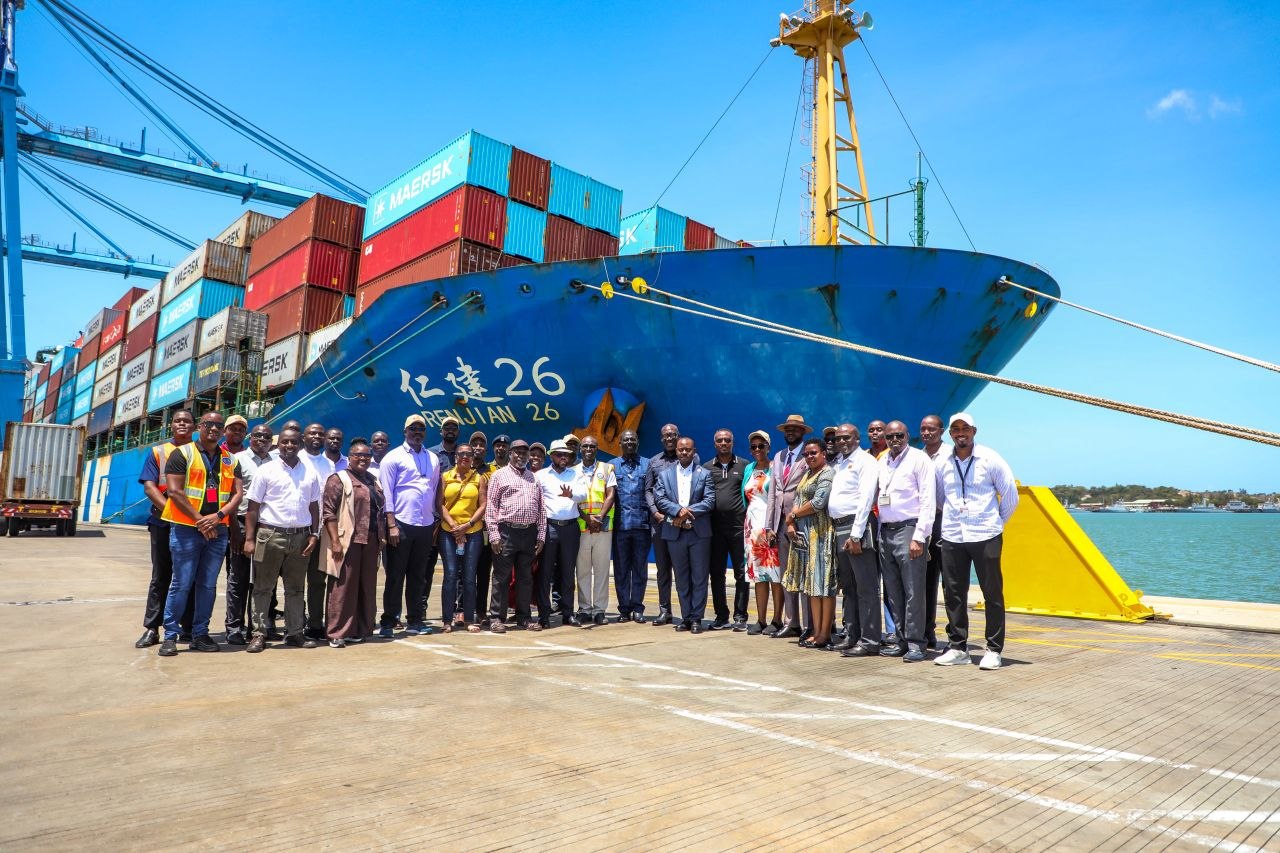
“Uganda's Parliament and Works Ministry staff visited Kenya's Naivasha ICD to study cargo evacuation and transhipment. The benchmarking aims to boost Uganda's railway development and Northern Corridor efficiency.”
There is a particular kind of irony that follows Ugandan delegations whenever they cross the border to study how other people do things. We have become a nation of professional benchmarkers, a country that produces more study tours than finished roads, more reports than railway sleepers. So when news filtered through that Uganda's Parliament Committee on Physical Infrastructure, alongside staff from the Ministry of Works and Transport's railways department, had pitched camp in Kenya to study how Kenya Railways moves cargo, my first instinct was to roll my eyes. Another jolly. Another photo opportunity at a container terminal. Another per diem pilgrimage. But then I looked closer at where exactly they went, and the eye rolling stopped. Naivasha Inland Container Depot is not a casual destination. It is the beating heart of the Northern Corridor's modern logistics experiment, and if Uganda is genuinely serious about the Standard Gauge Railway dream it has been talking about since the days of the first NRM manifesto, then somebody in Kampala finally understood that you do not learn how to run a railway by staring at a map of one. You go and stand beside the tracks, watch the cranes swing, and ask the uncomfortable questions.
The delegation's visit, which took place on the first day of September 2026, according to the brief that circulated from the committee, focused on cargo evacuation, handling and transhipment operations along the Northern Corridor. On paper that sounds like bureaucratic language designed to put a journalist to sleep. In practice, it is the difference between a country that trades competitively and one that bleeds money at every stage of the journey. Every Ugandan who has ever imported a car, a container of tiles, or a consignment of pharmaceutical supplies knows the pain of the Mombasa to Kampala run. The delays at the port. The queue of trucks at Malaba. The mysterious charges that appear on invoices like mushrooms after rain. The cargo sits, the demurrage climbs, and somewhere in Nakasero somebody gives a speech about easing the cost of doing business. Naivasha ICD represents Kenya's attempt to break that cycle by pushing cargo handling inland, closer to the border, decongesting Mombasa and creating a single coordinated flow between the port authority, the rail operator, the customs department and the clearing agents. Uganda's team went there to see how that integration actually works in practice, and the honest answer is that it works because Kenya stopped treating its parastatals as rival empires.
That is the lesson nobody in Kampala wants to hear. We love infrastructure as spectacle. We love launching projects, naming them after presidents, commissioning them with brass bands and tents. What we struggle with is the unglamorous plumbing of coordination, the daily discipline of making agencies talk to each other instead of guarding their turf. Kenya's Northern Corridor efficiency is not a miracle of engineering. It is a miracle of institutional ego management. Kenya Railways, the Kenya Ports Authority, the Kenya Revenue Authority's customs arm and the private freight operators sit in the same room, share the same data, and are judged by the same performance indicators. When a container leaves Mombasa, everybody in the chain knows where it is, when it will arrive, and who is responsible if it does not. In Uganda, we are still debating which ministry owns what, while the cargo rots at the border. The benchmarkers will have seen this with their own eyes. Whether they carry it home in their notebooks or in their hearts is the real question.
The numbers attached to the Malaba corridor tell their own story. Roughly eight hundred containers move through that artery every single day, and something in the region of nineteen point four million tonnes of cargo crosses annually. Those figures, which the delegation was briefed on during the visit, represent the economic bloodstream of Uganda, Rwanda, Burundi, South Sudan and eastern Democratic Republic of Congo. Every hour of delay at Malaba is not just a Kenyan problem or a Ugandan problem. It is a regional tax on every trader, every manufacturer, every consumer from Kampala to Juba to Goma. When you understand that, the Naivasha visit stops looking like a field trip and starts looking like a survival briefing. Uganda is landlocked, but landlocked does not have to mean logistically handicapped. Switzerland is landlocked. Rwanda is landlocked and has spent the last decade turning Kigali into a logistics and conference hub that shames much larger economies. The geography is not the curse. The management is.
This is also where the politics gets interesting, and you know I am not going to pretend otherwise. Railway development in Uganda has become a political football dressed in engineering overalls. Every budget cycle brings a new allocation, a new contractor announcement, a new promise that the SGR will reach Kampala by a date that keeps sliding like a matatu on a murram road. Meanwhile the old metre gauge line, the one that once carried coffee and cotton from the interior to the lake ports, has been allowed to decay into a museum piece. Entire stations that once hummed with activity now host goats and squatters. The men and women who worked those lines have grown old waiting for the revival. So when a parliamentary committee travels to Kenya to study best practice, there is a legitimate question Ugandans should ask. Is this preparation for action, or is it preparation for another round of talking about action? The answer will not be found in the communique. It will be found in the procurement documents, the land acquisition notices, and the first kilometre of track actually laid on Ugandan soil.
What makes the Naivasha model worth studying is not just the hardware. It is the software of the thing. Kenya's ICD system works because it treats the railway as part of a supply chain rather than as a standalone national asset. Cargo arriving at Mombasa can be cleared, loaded onto rail, moved to Naivasha, processed, and dispatched onward by road or rail to the border with minimal human friction. Customs officials are embedded in the logistics flow rather than sitting in separate buildings waiting for paperwork to walk over. The private sector is treated as a partner with performance contracts, not as a suspect to be shaken down. Uganda's delegation, which included technical staff from the railways department, will have seen scanners that talk to software, yard management systems that track containers in real time, and a culture where a delay is treated as an emergency rather than as a normal Tuesday. That is the transferable technology. The cranes are easy to buy. The culture is the hard part.
There is also a human story buried in all this, and it is the story of the Ugandan trader. The woman in Kikuubo who imports fabrics from Guangzhou and waits three weeks for her container to clear. The factory owner in Namanve who cannot compete with Chinese imports because his raw materials spend more time in transit than in production. The boda boda rider in Mbale whose spare parts cost double because of transport markups stacked along the corridor. These are the people who pay for inefficiency, and they pay silently. When the cost of moving a container from Mombasa to Kampala is significantly higher than moving the same container from Shanghai to Mombasa, something is fundamentally broken in the regional logistics chain. That gap is the real subject of the benchmarking visit. Not the cranes. Not the terminals. The gap between what Ugandans pay and what they should pay.
I have watched enough of these delegations come and go to be skeptical, but I am not cynical. Cynicism is a luxury for people who have given up, and I have not. There are genuine signs that the conversation in Kampala is maturing. The involvement of the Ministry of Works and Transport's railways staff alongside parliamentarians suggests a recognition that oversight and technical execution must move together. The focus on transhipment and evacuation rather than on ribbon cutting suggests an interest in the boring middle of the logistics process, which is where all the money is actually saved. And the choice of Naivasha, rather than a jaunt to some European capital with better hotels, suggests that somebody in the planning chain understands that the most relevant lessons are regional, not transcontinental. Kenya's problems look like Uganda's problems. Its solutions might fit too.
Still, a benchmark is only as good as the follow through. Uganda has benchmarked Singapore's port, Rwanda's ease of doing business, Malaysia's palm oil sector, and half of Dubai. The reports are gathering dust in ministry shelves, and the lessons have been archived rather than implemented. What would make this particular visit different is a public, time bound commitment with numbers attached. How many kilometres of track will be laid in the next financial year. How many containers will Uganda aim to move by rail rather than road by 2030. Which agency will be held accountable if the targets slip. Without that, the Naivasha trip becomes just another entry in the long ledger of good intentions. With it, it becomes the moment Uganda finally decided to stop admiring the corridor and start owning its share of it.
The regional stakes are enormous, and they extend far beyond trade statistics. The Northern Corridor is a geopolitical instrument. China, the Gulf states, Turkey, and the European Union are all watching how East Africa builds its transport spine, because whoever finances and operates the rails will shape the flow of goods, data and influence for decades. Kenya has already made its choices, courting foreign lenders and operators with mixed results and plenty of controversy. Uganda will soon face the same menu of offers, and the decisions made in the next few years will determine whether our railway serves Ugandans or serves the balance sheets of distant shareholders. The Naivasha visit was, in a quiet way, a glimpse of the future Uganda is trying to negotiate. It is not just about moving containers. It is about who controls the movement.
So here is my verdict, delivered with the affection of someone who loves this country enough to be honest about it. The benchmarking visit to Naivasha was necessary, overdue and genuinely useful. The delegation saw the right things and asked, one hopes, the right questions. But Ugandans have learned to judge their leaders by what happens after the plane lands back at Entebbe, not by the quality of the photographs taken abroad. The railway Uganda needs will not be built by study tours. It will be built by contracts signed, land acquired, steel laid, and trains running on time. The Kenyans have shown us the road. Whether we drive on it or just keep photographing it is entirely up to us. For now, the corridor handles its eight hundred containers a day with or without our admiration. The question is whether Uganda will ever handle its own.
Q: Why did Uganda's Parliament and Works Ministry staff visit Naivasha ICD in Kenya?
A: The delegation, drawn from the Parliamentary Committee on Physical Infrastructure and technical staff from the Ministry of Works and Transport's railways department, travelled to Kenya for a benchmarking visit focused on how Kenya Railways handles cargo evacuation, container handling and transhipment along the Northern Corridor. Naivasha Inland Container Depot was chosen because it demonstrates how rail, port and customs agencies can be integrated into a single efficient flow from Mombasa to regional markets. The visit was framed as preparation for Uganda's own railway development plans.
Q: What makes the Malaba corridor so important in this discussion?
A: Malaba is the critical border crossing where Kenyan and Ugandan logistics systems meet, and it handles an estimated eight hundred containers daily and roughly nineteen point four million tonnes of cargo annually. That volume serves not just Uganda but also Rwanda, Burundi, South Sudan and eastern DR Congo, which means any inefficiency at Malaba ripples across the entire region. Improving rail capacity and transhipment at points like Naivasha is ultimately about reducing the cost and time of moving goods through Malaba and onward to Kampala and beyond.
Q: Does this benchmarking visit mean Uganda's railway project is finally moving forward?
A: It is a positive signal that the right institutions are studying the right models, but a study tour is not the same as construction. Ugandans should watch for concrete indicators such as procurement awards, land acquisition along the proposed route, budget releases that actually reach the railways department, and the first sections of track being laid. Until those appear, the visit remains preparation rather than delivery, however useful the lessons learned at Naivasha may be.
Q: What is the single biggest lesson Uganda should take from Kenya's approach?
A: Coordination. Kenya's Northern Corridor works because the rail operator, port authority, customs agency and private freight companies share data, targets and accountability rather than guarding separate institutional empires. Uganda's challenge has never been a shortage of infrastructure plans but a shortage of joined up execution. If the delegation brought home nothing else but a serious commitment to inter agency coordination and performance measurement, the trip will have been worth every shilling of the travel budget, and then some.
Mpabeat Editorial
Uganda & East Africa Cultural Journalism Desk
Community Discussion
Reader comments, opinions, and analysis
Be the first to share your thoughts on this story. Everyone is welcome to contribute!
Related Cultural Stories

Gen Muhoozi Kainerugaba Lists 5 People He Fears on Earth
Uganda's CDF Gen Muhoozi Kainerugaba reveals he fears God, Museveni, J…