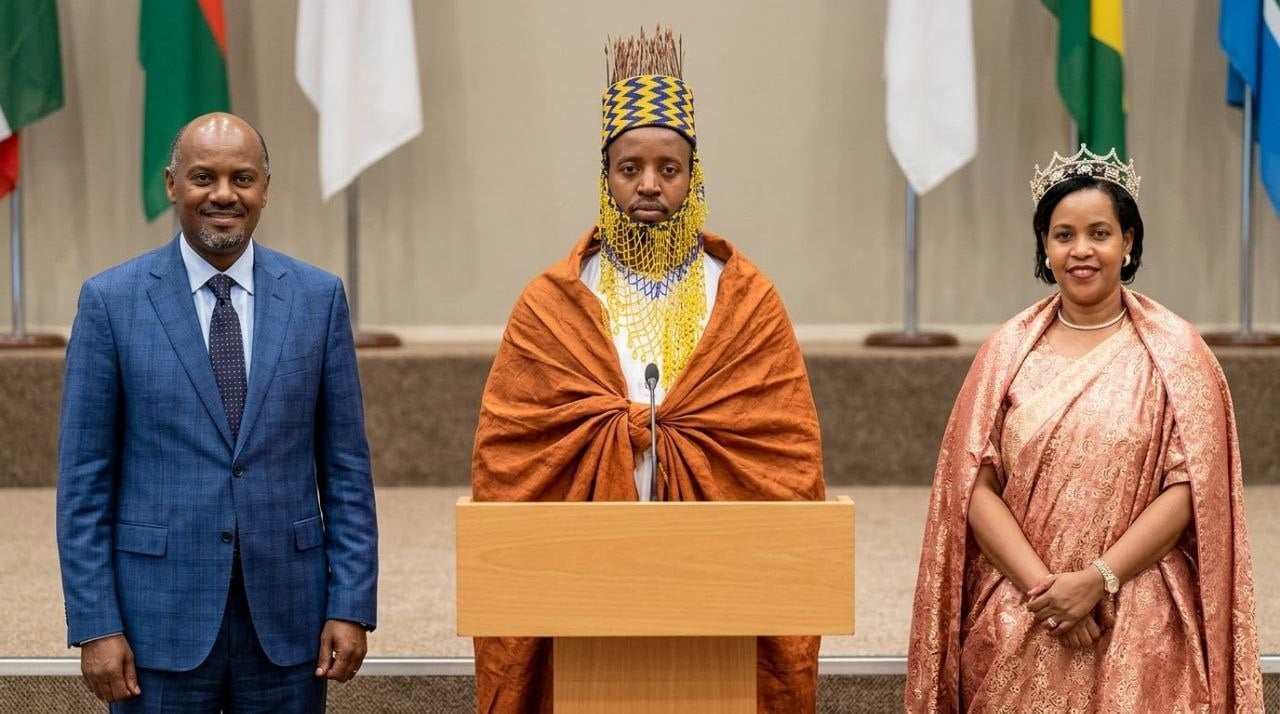
How Balam Barugahara Won Museveni's Ear and Reshaped Uganda's Cabinet
Moses Mukisa
Head of Cultural Journalism • Published 12 September 2026
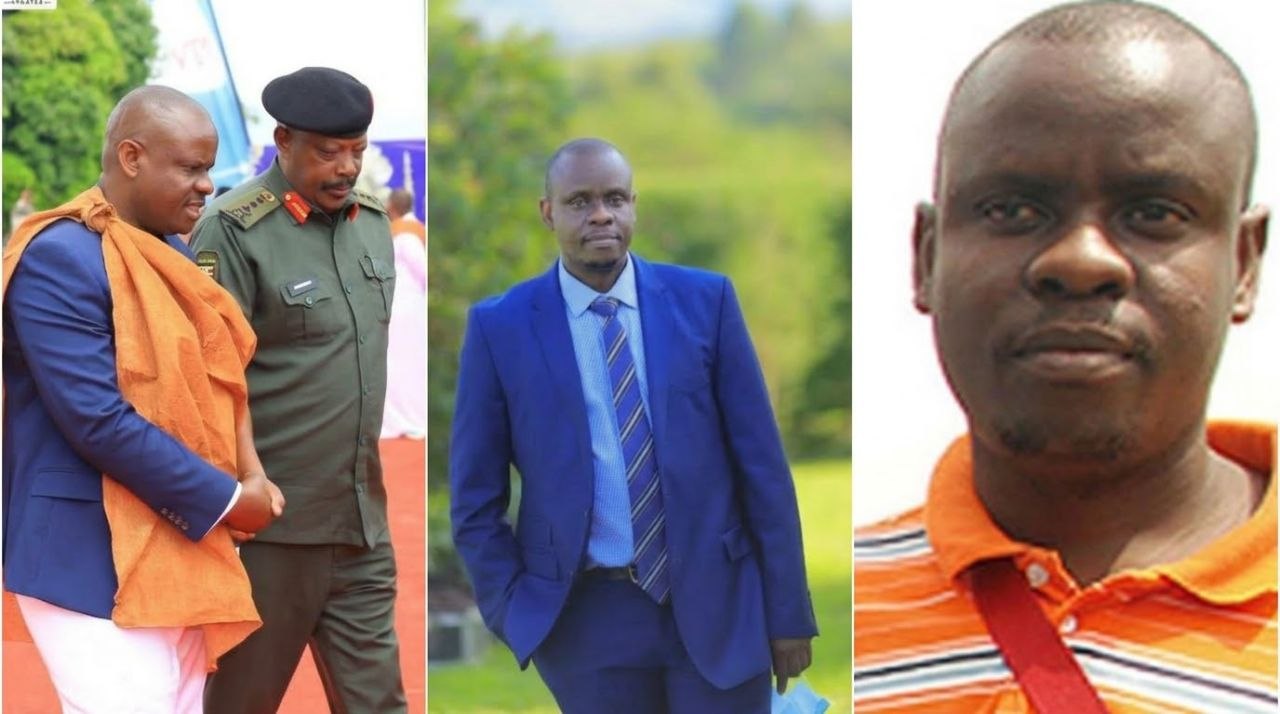
“Music promoter Balam Barugahara turned presidential access into political power, reshaping Uganda's cabinet in 2026. His rise reveals how entertainment and statecraft now intersect.”
There was a time, not so long ago, when the surest way to read the mood of power in Kampala was to watch the lineup at a state function. Who sat near the President, who was waved through the VIP rope, who got the microphone last. In 2026, that reading has become almost embarrassingly simple. The man standing closest to the fountain of patronage is not a career diplomat, not a ruling party greybeard, not a general with three stars on his shoulder. He is Balam Barugahara, a music promoter from the rough-and-tumble world of Kampala concerts, and he has just finished rearranging the furniture of Uganda's cabinet in a way that has left the old political class gasping.
To understand why this matters, you have to understand what a music promoter actually does for a living. A promoter is not simply a man who books a venue and prints tickets. A promoter is a fixer, a psychologist, a crowd engineer, a debt collector, a diplomat and a gambler rolled into one. He negotiates with artistes who are convinced they are being underpaid, with police commanders who control the permits, with sound engineers who disappear at the wrong moment, with sponsors who want their logo in every photograph, and with tens of thousands of restless young people who will riot if the headline act does not appear. Nobody survives that business for long without learning how to read a room, how to flatter without groveling, how to threaten without raising a voice, and how to make a powerful man feel that a good idea was his own. Those are precisely the skills of politics, and Barugahara has spent years perfecting them in the loudest possible classroom.
His climb did not happen overnight, and it did not happen in the dark. The entertainment economy in Uganda has always brushed against the state. Concerts need security. Festivals need licenses. Big international bookings need the cooperation of immigration, tourism and the security apparatus. A promoter who can deliver a peaceful, profitable, well-attended event is delivering something the state values enormously: visible happiness, controlled crowds and a story of national vibrancy. Barugahara understood earlier than most that a successful show is not just entertainment, it is a political product. A stadium full of singing young people is a photograph any government would pay for, and he learned to hand over that photograph at exactly the right moment.
From there, the transition was almost inevitable. Once you are the man who can fill a venue and keep it calm, you are the man who can fill a rally and keep it calm. Once you can move artistes across the country, you can move messages across the country. Once you understand which songs are breaking in Gulu, in Mbarara, in Mbale and in the Kampala suburbs, you understand something that no opinion poll will ever tell a politician: what the youth are actually feeling, week by week, in the language they actually speak. Barugahara became a listening post, and listening posts in a system where information is scarce become indispensable. He was not the only promoter to enjoy proximity to power, but he was the one who converted proximity into structure.
The 2026 cabinet reshuffle is the moment that conversion became undeniable. Several portfolios changed hands, and the pattern was hard to miss. Figures associated with the old patronage networks, the ones who had treated the youth vote as a seasonal inconvenience to be rented every five years, found themselves politely reassigned or quietly retired. In their places came people who understood the creative economy, digital mobilisation, event logistics and the politics of the timeline. Some of them are former broadcasters, some are organisers, some are businessmen who built audiences before they built anything else. Whether or not Barugahara's fingerprints are on every single appointment, the reshuffle's logic bears his signature. It rewards people who can move crowds and communicate in the register of the street, and it sidelines people whose only skill was surviving the last reshuffle.
Critics, and there are many, argue that this is a dangerous blurring of lines. They say that entertainment and statecraft should not share a bed, that a promoter's instinct is to sell tickets rather than to serve citizens, and that a cabinet shaped by crowd management is a cabinet shaped by the logic of the spectacle. It is a fair concern. When the machinery of government begins to resemble the machinery of a concert, the risk is that policy becomes performance, that announcements are timed for applause rather than for impact, and that the people who shout loudest get served first. There is also the uncomfortable question of access. In a system where one man's phone call can change a minister, what happens to the citizen whose problem cannot be turned into a good photograph?
But the dismissive reading, the one that sneers that this is just a showman playing dress-up in state house corridors, misses something important. Uganda's creative economy is not a toy. It employs hundreds of thousands of people, directly and indirectly. It generates foreign exchange through tourism and streaming, it shapes the national image abroad, and it gives young people a reason to believe that talent can pay. For decades, the sector was treated as a hobby, a nuisance, a source of noise complaints and moral panic. Artistes were summoned to explain themselves, taxed arbitrarily, banned from airplay, and lectured about decency by officials who had never bought a ticket in their lives. If the rise of a promoter to the centre of power changes that relationship, if it means the sector finally has a seat at the table when budgets are drawn, then something genuinely valuable may come out of this strange marriage.
And the timing is not accidental. The sound of the moment is the sound of the youth, and the youth have stopped waiting for permission. The amapiano wave that has swept through Kampala's clubs and onto every matatu radio is more than a genre, it is a demographic statement. You can read more about that phenomenon in our feature on the 2026 sound revolution, and the lesson there applies directly to politics. Whoever controls the soundtrack controls the room. A government that wants to speak to the young has to speak through the people the young already trust, and in 2026 those people are as likely to be promoters, deejays and content creators as they are to be politicians. Barugahara did not create that reality. He simply recognised it first and monetised it politically.
There is a deeper cultural shift at work too. Ugandan politics has always had a performative streak. Campaigns are rallies, rallies are concerts, and the boundary between a candidate and a hype man has never been especially clear. What is new is the professionalisation of that performance. The old model relied on local strongmen who could bus in a crowd and hand out envelopes. The new model relies on people who understand lighting, staging, timing, social media momentum and the psychology of a viral moment. That is a genuine upgrade in competence, even if it raises the same old questions about accountability. The crowds are better managed. The question is whether they are better served.
Insiders describe Barugahara's style as deceptively soft. He is said to prefer persuasion to confrontation, to collect people rather than crush them, to keep a mental ledger of favours owed and favours granted. In the promoter's world, you never burn a bridge, because the artiste you insult today is the artiste whose concert you need next year. That instinct for long-term relationship management is rare in politics, where loyalty is often measured in news cycles. It may prove to be his greatest asset, or his greatest vulnerability, depending on how the old guard decides to fight back. Already there are whispers, the kind that always accompany a rapid ascent, about who really benefits from the new arrangement and who is merely being used as a stepping stone.
What is certain is that the entertainment industry is watching this rise with a mixture of pride and anxiety. Pride, because one of their own is now standing in rooms where budgets and appointments are decided. Anxiety, because proximity to power is a double-edged sword. When a promoter becomes a political figure, every concert becomes a statement, every booking becomes a loyalty test, and every artiste becomes a potential pawn in a game they never signed up for. The sector's fierce independence, its irreverence, its willingness to mock the powerful, is precisely what makes it beloved. If that independence is perceived to have been traded for access, the same young audience that made these careers will be the first to notice, and the first to move on.
Then there is the regional dimension. Uganda does not exist in a vacuum. Across East Africa, creatives are moving into formal politics, and governments are waking up to the fact that culture is infrastructure. Kenya, Tanzania and Rwanda have all experimented with elevating artists and media figures into official roles, with mixed results. Uganda's version is distinctive because it is happening through the back door of access rather than the front door of election. Barugahara has never needed a ballot to become powerful. He needed a relationship. That is a very Ugandan story, and it tells you something uncomfortable about how power actually flows in this country, regardless of what the constitution says.
The reshuffle itself will be debated for months. Ministries will be renamed, mandates will be shuffled, and a new set of faces will learn the difference between a campaign promise and a budget line. But the deeper story is not about any single portfolio. It is about the emergence of a new kind of political operator, one who builds power out of audiences rather than constituencies, out of cultural capital rather than party structures. Barugahara is the most visible example, but he is not the last. The next generation of Ugandan power brokers is already learning the trade in studios, at festivals and on the timeline. Whether that is a cause for celebration or concern depends entirely on what they do with the ear they have won.
For now, the man from the concert circuit is standing at the centre of the picture, and the old men who once dismissed him as a noise maker are learning to pronounce his name carefully. Ugandan politics has always rewarded those who understand that the crowd is not an obstacle but an instrument. Balam Barugahara understood it before almost anyone else in the room. That, more than any single appointment, is why the cabinet looks different in 2026.
Q: Who is Balam Barugahara and why does he matter in Ugandan politics?
A: Barugahara is a music promoter who built his reputation organising large concerts and festivals in Kampala before moving into the orbit of President Museveni as an informal adviser on youth and the creative economy. He matters because his rise shows how access to the President, rather than elected office, has become one of the most powerful currencies in Ugandan politics. His influence is widely seen as a factor in the 2026 cabinet reshuffle, which elevated figures with creative economy and mobilisation backgrounds while sidelining older patronage networks.
Q: Is it unusual for an entertainment figure to hold this kind of political influence?
A: It is unusual in degree, though not entirely in kind. Ugandan politics has always had a performative, crowd-driven character, and artistes have long been used for mobilisation during campaigns. What is new is the elevation of a promoter into a sustained advisory role with apparent influence over appointments. Across East Africa, creatives are increasingly moving into formal political roles, but Uganda's version is distinctive because it runs through personal access rather than electoral mandate.
Q: What does this mean for Uganda's music and entertainment industry?
A: It cuts both ways. On one hand, the sector finally has a representative close to decision-making, which could translate into better policy, funding and recognition for an industry that employs hundreds of thousands of people. On the other hand, proximity to power risks compromising the independence and irreverence that made Ugandan music culture so vibrant. If artistes and promoters are seen as extensions of the state, audiences may lose trust in them, and the sector's credibility could suffer.
Q: What should we watch for next?
A: Watch how the new cabinet members perform in office, whether creative economy policy actually changes, and whether the old political networks mount a counter-offensive. Also watch the artistes themselves. If the industry's biggest names begin to align openly with the new power structure, expect a lively debate about selling out, and expect the youth audience, which has always been quick to detect insincerity, to render its verdict loudly. In Uganda, the crowd always gets the last word.
Related Cultural Stories
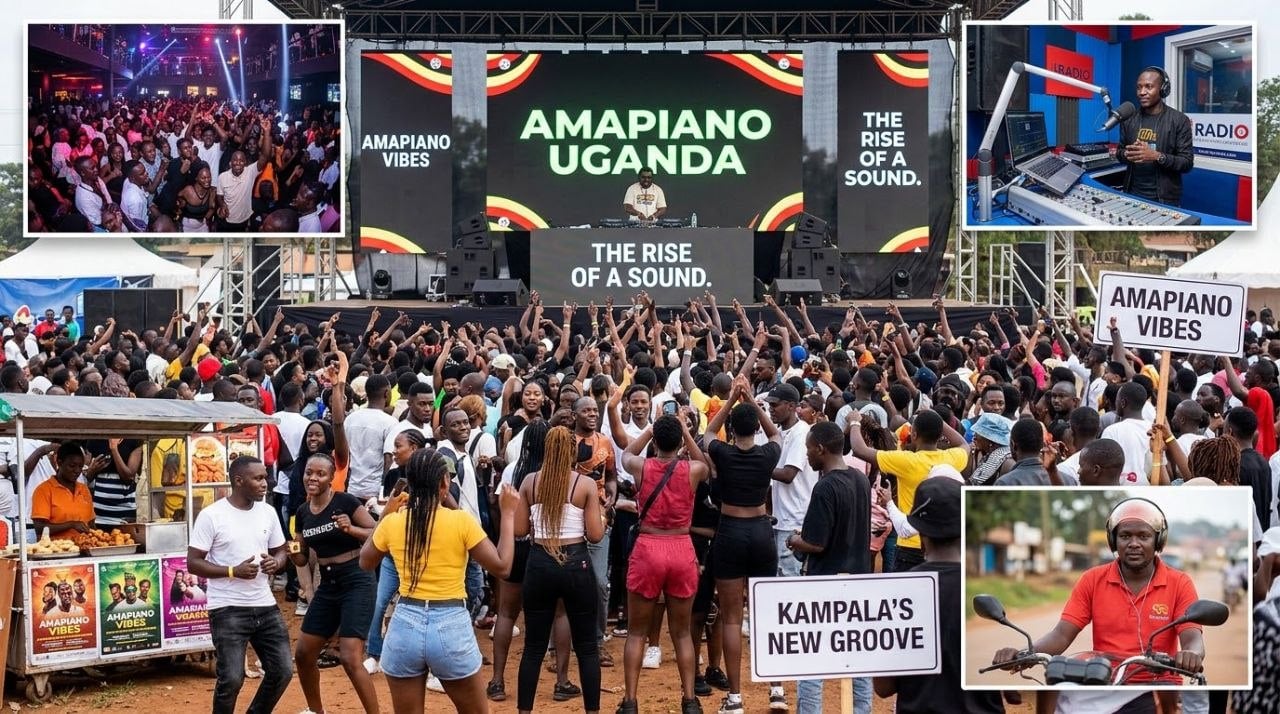
Amapiano Takes Over Uganda: The 2026 Sound Revolution
Amapiano has exploded in Uganda, reshaping playlists and parties. Discover how this South African genre became the heartbeat of Kampala's music scene in 2026.