Dr Cephcoh: The Fearless TikTok Voice Redefining Uganda’s Entertainment Industry
Moses Mukisa
Head of Cultural Journalism • Published 13 September 2026

“Dr Cephcoh is shaking up Uganda's entertainment scene with fearless TikTok commentary. Discover how he's redefining the industry in 2026.”
The first thing you notice about Dr Cephcoh is not the lab coat, and it is certainly not the stethoscope that occasionally swings into frame like a prop from a forgotten Nollywood set. It is the timing. In a country where everybody with a phone has an opinion, and where every opinion now has a ring light, the man has mastered the rarest currency on Ugandan social media: the pause before the punchline. He lets a clip of a singer wobbling through a live performance run two seconds longer than is comfortable. He lets a politician's soundbite hang in the air until you can almost hear the audience at home inhaling. Then he speaks, and within a single sentence he has either dismantled the whole thing or rescued it, and you are never quite sure which until you have watched it twice.
That is the craft behind the phenomenon. By early 2026, Dr Cephcoh has become one of the most recognisable commentary voices in Uganda's entertainment conversation, a TikTok-first personality whose reach has spilled into WhatsApp groups, boda boda debates, campus hostels, and the kind of office corridor arguments that used to be reserved for football. His rise says as much about him as it does about the moment Uganda is living through, where a creator with a phone and a sharp tongue can shape public opinion faster than a television panel that took three weeks to book.
To understand why he matters, you have to understand what entertainment commentary in Uganda used to look like. For years, the gatekeepers were a small, well-connected circle: a handful of radio presenters with evening drive slots, two or three newspaper columnists, a couple of TV entertainment shows that aired once a week, and the informal network of insiders who traded information at Kampala launch parties. If an artiste wanted a narrative built or destroyed, they went to those people. If a scandal needed managing, you called a publicist who knew which presenter to invite for lunch. The system was not necessarily corrupt, but it was narrow, and it was slow. A story could take days to travel from a club in Kololo to the living rooms of Mbale.
Dr Cephcoh did not just enter that system. He ignored it entirely. His early clips were raw, shot in ordinary rooms with ordinary lighting, and they worked precisely because they did not pretend to be television. He was not reading a script written by a producer. He was reacting, in real time, to the same clips everyone else was reacting to, and he was doing it with a vocabulary that mixed Luganda, English, slang, and the specific cadence of a man who has clearly spent a lot of time in the audience rather than on the stage. That authenticity is not a marketing strategy. It is the entire product.
What separates him from the flood of reaction accounts is the fearlessness, and fearlessness in Uganda's entertainment space is not a small thing. This is an industry where relationships run deep, where the same promoter who books your favourite artiste also owns the club, sponsors the awards show, and employs half the media personalities you admire. Criticising the wrong person can cost you access, invitations, and income. Many commentators learn this quickly and adjust. They become diplomatic. They praise everything. They turn every review into a soft launch announcement.
Dr Cephcoh has taken a different road. He has built a reputation for saying the thing that everyone in the room is thinking but nobody wants to say on record. When a hyped concert fails to fill the venue, he does not pretend the empty seats were a creative choice. When a veteran artiste releases something below their standard, he says so, often with the affectionate exasperation of a fan who expected better. When industry figures use young creatives as props for photo opportunities, he notices, and he says that he noticed. That willingness to name the uncomfortable has earned him enemies, and it has earned him something far more valuable: the trust of an audience that has grown tired of being managed.
There is a risk in that approach, and he has clearly thought about it. Fearless commentary can slide into cruelty, and cruelty travels faster than analysis on any platform. What has kept him on the right side of the line, for the most part, is that his sharpest material is aimed at power rather than at vulnerability. He goes after the established, the comfortable, and the performative. He is harder on a promoter with a track record than on a struggling newcomer finding their footing. That instinct, whether deliberate or natural, is what turns a critic into a voice people defend.
His influence now extends well beyond the comment section. In the same way that a single TikTok clip can send an old song back up the streaming charts, a Dr Cephcoh video can shift how the public receives a release, a concert, or a controversy. Artistes have learned that ignoring him is not an option, and that responding badly is worse than not responding at all. A calm, witty reply can humanise a star. A defensive rant can turn a minor critique into a week-long story. Watching how different figures handle that dynamic has become its own form of entertainment, a kind of live case study in public relations conducted in front of millions.
This is where his story connects to the wider reshaping of Uganda's entertainment industry. The old gatekeepers have not disappeared, but their monopoly on narrative has. Creators who understand the algorithm, the audience, and the culture now sit alongside radio and television as genuine power centres. The rise of figures like Dr Cephcoh is part of the same current that has carried new sounds and new scenes into the mainstream, from the genre shifts documented in our look at how amapiano took over Uganda's 2026 sound to the way digital personalities now shape what the country talks about on any given evening. The tools changed, and the people who mastered the tools became the new establishment, whether they wanted the title or not.
There is also a political dimension that cannot be ignored, because in Uganda entertainment and politics have never stayed in their lanes. Artistes get invited to rallies, endorse candidates, sing at national events, and quietly negotiate for influence. Commentators who build large audiences inevitably attract attention from people who understand that attention is power. Dr Cephcoh has navigated this carefully, keeping his commentary focused on the industry while occasionally letting his audience know exactly where his sympathies lie when public figures overreach. In a media environment where speaking plainly about power carries real consequences, that balance is delicate, and it is watched closely by everyone from fellow creators to the people who would rather he stayed quiet. The broader question of who gets to shape public conversation, and how proximity to power works in this country, is one we have explored before in our analysis of how Balam Barugahara won Museveni's ear and reshaped the cabinet, and the same dynamics apply to the entertainment world, just with better lighting and worse contracts.
What makes his trajectory genuinely interesting is that he has not tried to become a traditional media star. There is no desperate scramble for a television slot, no attempt to soften the brand for advertisers who might get nervous. Instead, he has doubled down on the format that made him, and in doing so he has proved something important about the Ugandan market: audiences here are not looking for polish. They are looking for honesty delivered with wit. They will forgive a shaky camera and a background of household noise. They will not forgive being condescended to.
That lesson is now being studied by a new generation of creators. Walk through any university campus and you will find young people filming commentary clips in their rooms, trying to find their own version of that voice. Some will build real audiences. Most will not, because the formula cannot be copied. Fearlessness is not a filter you apply in post-production. It is a decision you make every time you choose to say the true thing instead of the safe thing, and it costs something each time.
The industry, for its part, is still adjusting. Publicists now monitor TikTok the way they once monitored radio call-in shows. Artistes draft statements before a video has even finished trending. Awards organisers quietly wonder whether a single clip from the wrong creator could overshadow months of planning. That is the new reality, and it is not going away. The centre of gravity in Ugandan entertainment conversation has shifted from boardrooms and broadcast towers to a phone screen held at arm's length, and the people who understood that early are now the ones setting the agenda.
Whether Dr Cephcoh lasts is a different question, and an honest one. Internet fame is brutal and fast, and the same audience that crowns you can move on within a season. Sustaining relevance requires evolution, and evolution requires the willingness to be wrong sometimes in public. The creators who survive are the ones who treat their audience as intelligent, who admit when a take has aged badly, and who keep finding new things to be curious about rather than recycling the same outrage. On the evidence so far, he seems to understand this better than most.
What is certain is that he has already changed the rules. He has shown that a Ugandan creator does not need permission from the old gatekeepers to become a defining voice in the culture. He has shown that criticism, delivered with craft and courage, can be a form of respect rather than an attack. And he has shown that in 2026, the most powerful thing you can have in this industry is not a big budget or a famous surname. It is credibility, and the nerve to use it.
Q: Who is Dr Cephcoh and why is he suddenly everywhere?
A: Dr Cephcoh is a Ugandan TikTok creator and entertainment commentator who has built a large following through sharp, fearless analysis of the music, celebrity, and media scene. His rise reflects a broader shift in Uganda where digital creators now shape public conversation as much as traditional radio, TV, and newspaper voices. He is "everywhere" because his clips travel easily across TikTok, WhatsApp, and everyday conversation.
Q: What makes him different from other entertainment commentators?
A: The main difference is his willingness to say unpopular things about powerful figures in the industry. Many commentators soften their criticism to protect relationships with promoters, labels, and artistes. He has built trust by going after the established and comfortable rather than punching down at vulnerable newcomers, and by delivering his points with wit rather than pure outrage.
Q: Does his commentary actually affect the industry?
A: Yes, in practical ways. A single viral clip can influence how the public receives a song, a concert, or a controversy, and can force artistes and publicists to respond quickly. His influence has made TikTok monitoring a standard part of entertainment PR in Uganda, similar to how radio call-in shows once shaped public opinion.
Q: Can his success be copied by young creators?
A: The format can be copied, but the core of it cannot. His appeal rests on credibility and courage, which are decisions rather than production tricks. Young creators who try to imitate him often miss the point: audiences respond to honesty delivered with craft, not to a costume or a catchphrase. The ones who last are those who develop their own perspective and treat their audience as intelligent.
Related Cultural Stories
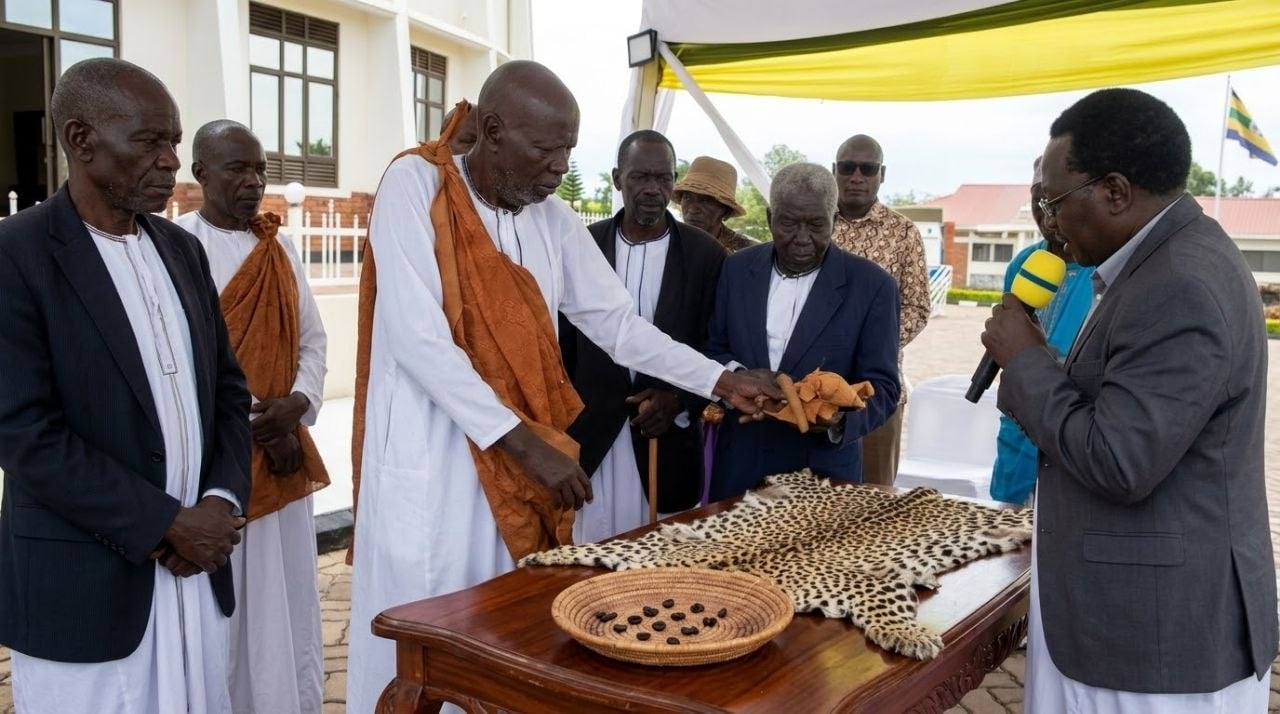
Tooro Burial Ritual: 9 Coffee Beans & Leopard Skin
King Oyo's burial rites reveal ancient Luo-Bito traditions binding Tooro and Acholi. Prince Edward Kijanangoma performed the sacred coffee bean ritual.
