Amapiano Takes Over Uganda: The 2026 Sound Revolution
Moses Mukisa
Head of Cultural Journalism • Published 12 September 2026
“Amapiano has exploded in Uganda, reshaping playlists and parties. Discover how this South African genre became the heartbeat of Kampala's music scene in 2026.”
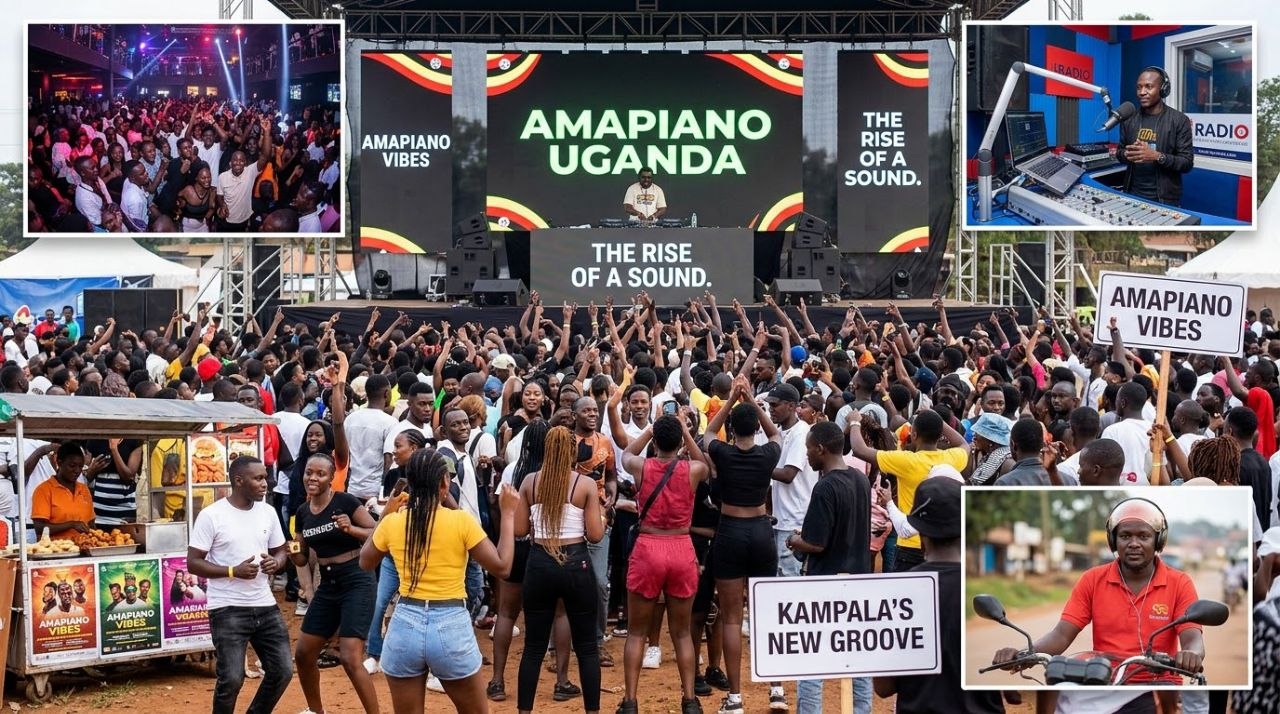
The first time Amapiano truly announced itself in Kampala, it did not arrive like a conqueror. It crept in. A log drum here, a shaker there, a soft piano riff floating under a song that seemed to have no interest in rushing anywhere. By 2026, that quiet arrival has become a full takeover. Walk through Kabalagala on a Friday night, pass through the bars of Ntinda, squeeze into a matatu heading to Najjera, and the sound is everywhere. It is in the boda boda stages, in the salons of Wandegeya, in the boutiques of Acacia Mall, and in the noisy, glorious chaos of a Kampala wedding reception. Amapiano is no longer a South African import. It is the pulse of Ugandan nightlife, and the industry is still adjusting to what that means.
To understand how we got here, you have to go back to the lockdown years, when Ugandan audiences, stuck at home and glued to social media, began soaking up South African house sounds at a rate nobody predicted. Amapiano had already been building in the townships of Gauteng since the mid 2010s, a slower, more soulful cousin of kwaito and deep house, built on those unmistakable log drums and airy piano chords. Ugandan DJs who had spent years playing Afrobeat, dancehall, and our own kadongo kamu and band music began experimenting. The experiment worked. By the time the clubs fully reopened, the genre had found a foothold that refused to loosen.
What makes the Ugandan chapter interesting is that we did not simply copy. We chewed it, swallowed it, and spat out something with our own flavour. Producers in Kampala started slowing the tempo even further, layering in Luganda vocals, dropping in ndere flute samples, and building grooves around the rhythms of bakisimba and kiganda drum patterns. The result is a hybrid that feels both foreign and deeply local, a sound that can fill a Kampala rooftop at midnight and still make sense at a Sunday afternoon garden party in Entebbe. This is the same instinct that gave us kadongo kamu, that gave us kidandali, that gave us the dancehall Luganda wave of the 2000s. We take what we love and we make it ours.
The artists driving this revolution are a mix of veterans who saw the wave coming and young stars who were born into it. Established names who once built careers on Afrobeat and dancehall have quietly recalibrated, adding piano driven tracks to their catalogues and watching the streaming numbers climb. Meanwhile, a new generation of producers, many of them working out of small home studios in Makindye, Kawempe, and Kireka, have become the invisible architects of the sound. They do not always get the headlines, but they are the ones crafting the log drum loops that keep the city moving. If you ask around the industry, the consensus is clear: the producers are the real winners of this era.
Radio has played its part too. Stations that once reserved Amapiano for a late night slot now run it through drive time. Presenters who were sceptical have become converts, because the numbers do not lie. Request lines light up. Social media clips of crowds losing their minds to a drop circulate for days. And the playlist culture on streaming platforms has amplified everything, giving Ugandan Amapiano tracks a reach that would have been unimaginable a decade ago. A song recorded in a bedroom in Nansana can now be heard in Nairobi, Dar es Salaam, Lusaka, and even back in Johannesburg, where listeners are curious about what East Africa is doing with their sound.
The parties themselves have changed. The Amapiano party is a different animal from the traditional Ugandan night out. It is slower, more deliberate, more about the groove than the hype. Dancers have developed their own vocabulary, a loose, fluid style that borrows from South African dance challenges but adds a distinctly Ugandan looseness. You see it at events across Kampala, at the themed nights that have multiplied like mushrooms, at the pool parties in Munyonyo, at the brunches that stretch from noon to sunset. The genre has created an entire economy of events, and event promoters who read the room early have been rewarded handsomely.
There is also a fashion dimension, because in Uganda music and style have always walked hand in hand. The Amapiano crowd dresses differently. Think relaxed tailoring, bold prints, sunglasses indoors, a certain unhurried confidence. It is a look that says we are not in a hurry, and neither is the music. This aesthetic has spilled into the broader culture, influencing everything from boutique window displays to the way young Kampalans pose for photographs. The genre has become a lifestyle, and lifestyle sells.
Of course, not everyone is celebrating. There is a legitimate conversation happening about whether Amapiano is crowding out our own traditional sounds. Veteran musicians have grumbled, sometimes publicly, that band music and live instrumentation are being pushed to the margins. It is a fair concern, and it deserves a serious answer rather than a defensive one. The truth is that Ugandan music has always evolved by absorbing outside influences. Kadongo kamu absorbed Congolese guitar. Dancehall absorbed Jamaican rhythms. Afrobeat absorbed Nigerian and Ghanaian sensibilities. Each wave provoked the same anxiety, and each time our musicians responded by creating something new. There is no reason to believe this wave will be any different.
In fact, the smartest artists are already blending. You hear live bands incorporating Amapiano grooves into their sets, saxophonists improvising over log drum patterns, traditional drummers finding common ground with electronic producers. This cross pollination is where the real magic is happening, and it is where Uganda's contribution to the global Amapiano conversation will ultimately be judged. We are not just consumers of this sound. We are becoming contributors, and that distinction matters enormously for the long term health of the industry.
The business side remains complicated. Royalties are still a headache, streaming payouts are still modest for most artists, and the informal nature of many collaborations means that credit and compensation are often disputed. The genre's rise has exposed how fragile our industry infrastructure still is. If a Ugandan Amapiano hit blows up across the continent, who exactly gets paid? These are the questions that will define the next phase, and they are the same questions that have haunted Ugandan music for decades. The difference now is that the stakes are higher, because the audience is bigger.
Looking ahead, the signs suggest Amapiano in Uganda is not a passing fad. It has embedded itself too deeply in the culture for that. It has its own stars, its own parties, its own fashion, its own slang, its own economy. It has even started influencing the way other genres are produced, with Afrobeat and dancehall tracks increasingly borrowing its textures. The genre has become a kind of lingua franca, a shared language that connects a university student in Makerere with a trader in Kikuubo with a diaspora kid in London. That is rare, and it is powerful.
What happens next depends on whether the industry can build lasting institutions around the moment. That means proper management, transparent deals, investment in production quality, and a genuine commitment to developing young talent. It also means resisting the temptation to chase every trend and instead nurturing a distinct Ugandan Amapiano identity that the world can recognise. We already have the ingredients. The question is whether we have the patience and the discipline to cook something that lasts.
For now, though, the music is playing, and the city is dancing. Kampala has always been a place that moves to its own rhythm, and in 2026 that rhythm has a log drum in it. Whatever comes next, this era will be remembered as the moment Uganda stopped merely listening to Amapiano and started speaking it fluently. That is worth celebrating, and it is worth protecting.
Q: Is Amapiano actually Ugandan now, or are we just borrowing it?
A: Both things are true at once. The genre's roots are unmistakably South African, and that should always be acknowledged with respect. But the version dominating Kampala in 2026 has been reshaped by Ugandan producers, vocalists, and dancers into something with its own accent. Borrowing is not theft when you transform what you borrow. The most honest answer is that Amapiano has become part of our musical vocabulary, the way dancehall and Afrobeat did before it.
Q: Will this wave push out our traditional music and live bands?
A: It could, if the industry is lazy, but it does not have to. The most exciting work right now is happening where Amapiano meets live instrumentation and indigenous rhythms. Traditional music has survived every previous wave of foreign influence, and it will survive this one, especially if established artists and cultural institutions invest in fusion rather than retreat. The danger is not the genre itself. The danger is neglect.
Q: Who is really benefiting from the Amapiano boom?
A: Producers, DJs, event promoters, and a new generation of artists are seeing the clearest gains, along with the fashion and hospitality businesses that ride the wave. Established stars have adapted and stayed relevant. The people who benefit least are often the ones with the weakest contracts. Until royalty collection and deal transparency improve, the boom will keep enriching some players far more than others, and that imbalance is the industry's biggest unfinished business.
Q: Where does Ugandan Amapiano go from here?
A: The realistic path is deeper regional and continental reach, more collaborations with South African and East African artists, and a stronger emphasis on live performance. If Ugandan producers keep developing a signature sound and the industry builds proper structures around them, the country could become a genuine hub for the genre rather than just a market for it. The talent is there. The infrastructure is the project. Watch this space, because the story is far from finished.
Related Cultural Stories

How Balam Barugahara Won Museveni's Ear and Reshaped Uganda's Cabinet
Music promoter Balam Barugahara turned presidential access into political power, reshaping Uganda's cabinet in 2026. His rise reveals how entertainment and statecraft now intersect.