Tooro In Crisis: Mwenda Accuses Queen Mother Of Murder And Forgery
Moses Mukisa
Head of Cultural Journalism • Published 12 September 2026
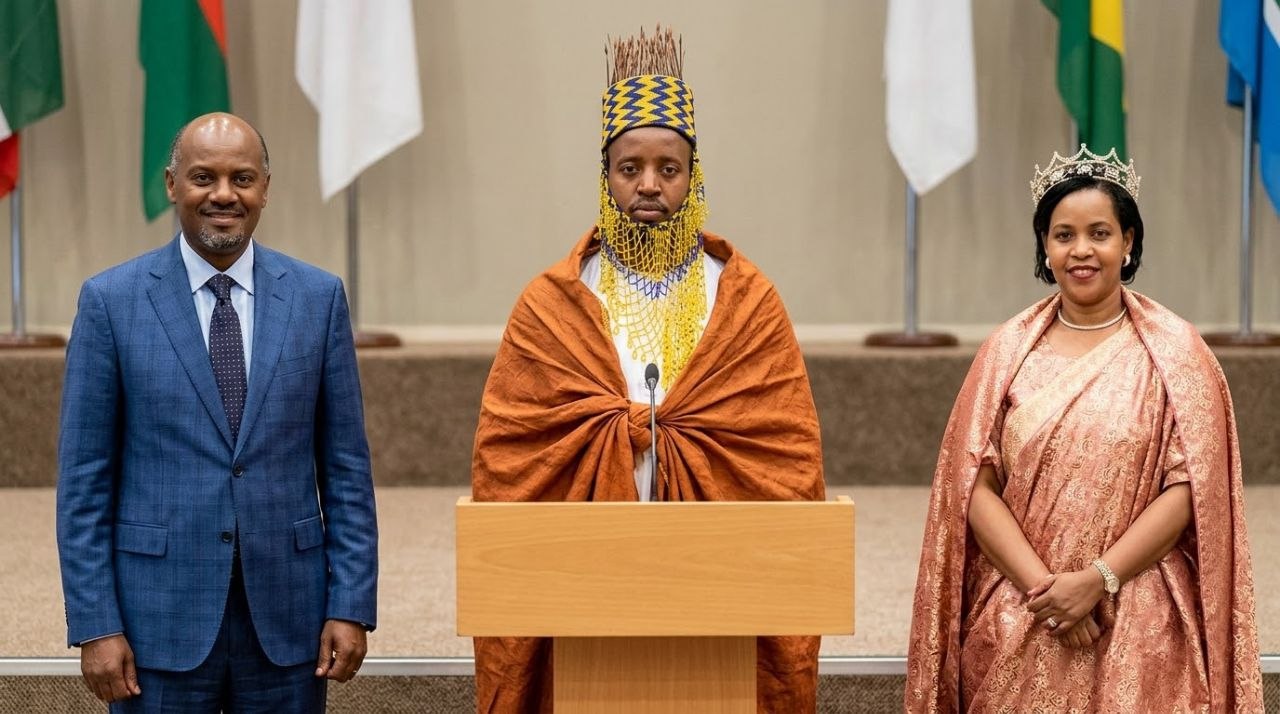
“Andrew Mwenda drops bombshell allegations against Tooro Queen Mother Best Kemigisa, accusing her of murder, land theft and forging King Oyo's will as burial chaos unfolds.”
FORT PORTAL. The casket of a king should never have to be carried by soldiers. That is the first thing to sit with, because everything else in this sad and furious story flows from that single, shameful image: the body of Omukama Oyo Nyimba Kabamba Iguru Rukidi IV moved by armed men because the woman who once stood beside him as Queen Mother refused to let him be laid to rest. A monarch who sat on the throne of Tooro for three decades, who was crowned as a toddler in 1995 and grew up in the full glare of a nation, ended his journey not with drums and royal ritual but with a standoff at the gates. Whatever you think of the man, the boy king who became a man under our collective gaze, he deserved better than that. So did Tooro.
But let us not pretend this began with a funeral. It began long before, and it has been simmering in Fort Portal for years, in land disputes, in clan grievances, in the quiet resentment of a kingdom that has watched its cultural authority nibbled away by court intrigue and money. What Andrew Mwenda did this week was not invent a scandal. He lit a match in a room that was already soaked in paraffin. The veteran journalist and political commentator went public with a set of allegations so explosive that they have effectively turned a royal burial into a national inquest. He accused the former Queen Mother, Best Kemigisa, of orchestrating the 1999 murder of Prince Charles Happy Kijanangoma. He accused her of evicting the prince's grandmother, Kezia Byanjeru, from her home, an eviction he says led to a fall, a broken hip, and eventually her death. He accused her of selling off kingdom land. And he accused her of forging the will of the late King Oyo. Murder, displacement, land theft, forgery. In any other country, that list would trigger a commission of inquiry before the week was out.
Let us be careful and honest about what we have here. These are allegations. They are serious, they are specific, and they deserve to be tested in a court of law or before a properly constituted inquiry, not simply swallowed whole because they suit one side of a succession fight. Mwenda is not a man who speaks softly, and he is not a man who has ever pretended to be neutral. He has spent a career poking at sacred cows, and in Uganda the royal houses are among the most sacred cows of all. That is precisely why his intervention matters. When a figure of his reach and his appetite for confrontation says these things out loud, on the record, in the middle of a grieving kingdom, the allegations stop being palace whispers and become part of the public record. Kemigisa has not, to my knowledge, offered a detailed public rebuttal of each claim, and until she does, the cloud hangs there, ugly and unresolved, over a family that is already tearing itself apart.
The chronology is what makes this so painful. King Oyo died on August 27, 2026, in Dallas, Texas, after a long and very public battle with brain cancer. The kingdom had watched him fight that illness with a dignity that moved even his critics. Then came the void, and into that void rushed every unresolved conflict the monarchy had been carrying for a generation. On September 9, the Babiito clan, the royal clan from which the Omukama is drawn, named Prince Edward Rukidi Kijanangoma as the new king. It was a decision meant to give Tooro a successor and a sense of continuity. Instead it detonated a second crisis, because Oyo's immediate family rejected the choice outright. They pointed to a 2022 will, a document they say names an unnamed biological son as the rightful heir. And here is where the forgery allegation bites hardest, because a will that names an unnamed son is either a carefully protected secret or a very convenient piece of paper, and the difference between those two things is now the difference between a smooth succession and a constitutional war inside a cultural institution.
Three days after the clan's announcement, on September 12, 2026, Oyo was finally buried at the Karambi Royal Tombs. But the road to that burial ran through confrontation. Kemigisa is said to have blocked the burial, and it took soldiers, actual uniformed soldiers of the state, to move the casket. Read that again. Not elders. Not clan heads. Not the ritual custodians of the tombs. Soldiers. In a kingdom whose entire legitimacy rests on tradition, the final ritual of a king was completed under the shadow of the gun. That image will outlive every press statement issued this month. It will be the thing people remember, the thing they tell their children, the thing that will be cited every time someone asks why Tooro's crown feels lighter today than it did a year ago.
Now, I want to talk about the land, because the land is where all of this really lives. The allegations about kingdom land being sold are not new. They have circulated in Tooro for years, in the tea estates, in the trading centres around Fort Portal, in the complaints of families who say they were pushed off ground their grandparents cultivated. Land in western Uganda is not an abstraction. It is identity, inheritance, and survival. When you accuse a royal figure of selling it, you are not just accusing them of a financial crime. You are accusing them of selling the ancestors. That is why the Kezia Byanjeru story lands with such force. An elderly woman, the grandmother of a murdered prince, said to have been evicted and to have died after a broken hip. It is a small, human detail in a story full of big political noise, and it is probably the detail that will haunt people longest. Grandmothers in Tooro are not supposed to die because of palace politics.
And then there is the 1999 murder of Prince Charles Happy Kijanangoma. Twenty-seven years is a long time to carry an unsolved death, and long enough for a grieving family to feel that the truth was buried with the body. Mwenda's claim that Kemigisa orchestrated it is the most serious allegation of all, and it is the one that most demands hard evidence rather than rhetoric. If there is evidence, it belongs in front of investigators, not just in a broadcast. If there is no evidence, then a family's pain is being used as ammunition, and that too is a kind of cruelty. Either way, the prince's name is back in the national conversation, and his relatives deserve more than to be a footnote in somebody else's war.
Let me step back and say something about what this whole mess reveals about the way we handle our cultural institutions. Uganda's traditional kingdoms were restored in the 1990s with enormous goodwill and very little clarity. They were given cultural authority but not real constitutional protection, real dispute resolution mechanisms, or real transparency. Succession rules were left vague, often deliberately, because vagueness suits the people who hold power in the moment. Wills were kept private. Land was administered through trust arrangements that almost nobody outside the palace could inspect. We are now seeing the bill for all of that vagueness arriving at once. When a king dies, a kingdom should not have to improvise its own constitution in real time on live television. Tooro is not failing because its people are divided. It is failing because the structures were never built to survive a contested transition, and now a contested transition is exactly what it has.
The role of the state in all this is the question nobody in officialdom wants to answer. Soldiers moved a king's casket. That means somebody in government made a decision, or allowed a decision to be made, that the burial could not wait for the family and the clan to resolve their differences. Was that decision about public order, about preventing violence at the tombs, or about backing one faction over another? The silence from the centre is deafening. In a country where the relationship between the state and the monarchies has always been delicate, this is a moment that calls for transparency, not for men in uniform quietly settling a family quarrel with their presence. If the state has a view on who the rightful heir is, it should say so openly and explain its reasoning. If it does not, it should stay out of the tombs.
What happens next matters enormously, and not just for Tooro. There are other kingdoms in Uganda watching, with their own ageing monarchs, their own contested lands, their own unspoken succession anxieties. If Tooro's crisis is resolved through force and silence, that becomes the template. If it is resolved through an independent inquiry, a public accounting of the will, a transparent process for confirming the heir, and real answers about the 1999 death and the land sales, then Tooro could actually come out of this stronger, with a monarchy that has earned renewed trust rather than merely inherited it. That is the fork in the road, and the people of Tooro, who have been remarkably patient through all of this, deserve leaders who choose the harder path.
I keep coming back to the boy on the throne. Oyo was crowned at three years old. He had no say in the burdens placed on him. He grew up with the whole country watching him learn to be a king, and he died young, far from home, of a disease that does not care about lineage or ritual. Whatever the truth turns out to be about the will, the land, the prince, and the grandmother, one thing is certain. The man is gone, and the fight over what he left behind has already cost the kingdom more dignity than any single allegation could. Tooro will survive this, because Tooro has survived worse. But it will not survive another burial conducted at gunpoint. The drums should be the loudest thing at a royal funeral. Not the boots.
Q: What exactly is Andrew Mwenda accusing the former Queen Mother of?
A: Mwenda has publicly alleged that Best Kemigisa orchestrated the 1999 murder of Prince Charles Happy Kijanangoma, evicted the prince's grandmother Kezia Byanjeru in a move he links to her death after a broken hip, sold off kingdom land, and forged the will of the late King Oyo. These are allegations, not proven findings, and they have not been tested in a court or before any formal inquiry. Until they are, they remain claims made in the public arena during an already bitter succession dispute.
Q: Why is there a dispute over who becomes the next king of Tooro?
A: On September 9, 2026, the Babiito royal clan named Prince Edward Rukidi Kijanangoma as the new Omukama. Oyo's immediate family rejected that choice, pointing instead to a 2022 will they say names an unnamed biological son as the rightful heir. The existence and authenticity of that will is now central to the crisis, and it is the document at the heart of the forgery allegation. Until the will is independently verified and the succession rules are clarified, the kingdom faces two competing claims to its throne.
Q: Why did soldiers have to move King Oyo's casket?
A: Kemigisa is said to have blocked the burial, which forced state security personnel to intervene and move the casket so that Oyo could be interred at the Karambi Royal Tombs on September 12, 2026. The use of soldiers at a royal funeral has been widely criticised as a degradation of tradition and a sign that the state is now entangled in what should be a family and clan matter. No clear public explanation has been given for why the intervention was deemed necessary.
Q: What should happen now to resolve the crisis?
A: The cleanest path would be an independent inquiry that verifies the 2022 will, reviews the land transactions, and examines the unresolved 1999 death, alongside a transparent process agreed with the clan and the royal family for confirming the heir. The state should also explain its role in the burial standoff. Tooro's monarchy needs rules it can point to, not improvisation under pressure, and the people of the kingdom deserve answers rather than more silence from Fort Portal and Kampala alike.
Related Cultural Stories
How Balam Barugahara Won Museveni's Ear and Reshaped Uganda's Cabinet
Music promoter Balam Barugahara turned presidential access into political power, reshaping Uganda's cabinet in 2026. His rise reveals how entertainment and statecraft now intersect.